

Businesses across many industries are working to reduce environmental impact while managing operational costs. Office environments generate waste through energy use, paper consumption, supply purchasing, and daily workplace activities. Many companies are reviewing how their offices operate in order to reduce resource use and support sustainability goals.
Creating an eco-friendly workplace often begins with practical operational changes. Adjustments to energy management, document handling, purchasing policies, and vendor partnerships can reduce waste while maintaining productivity. Over time, these improvements can lower operating expenses while helping organizations reduce their environmental footprint.

What Makes a Sustainable Workplace
Sustainable business practices focus on reducing the resources required to support daily business operations. Energy consumption, water use, waste generation, and supply management all influence the environmental impact of a workplace.
Businesses often begin by evaluating the systems and activities that use the most resources. Office lighting, computer equipment, heating and cooling systems, and document management processes can all affect how much energy and material a workplace consumes.
Environmental responsibility also extends beyond internal operations. Vendors and service providers influence how resources are used across workplace services. Companies that select environmentally conscious partners for items like sustainable workwear and supplies often strengthen their broader efforts.
10 Practical Ways to Increase Sustainability in the Workplace

Many sustainability improvements come from routine operational decisions. The following sustainable office practices help businesses reduce resource consumption while maintaining a productive workplace.
1. Use Professional Uniform Services Instead of Home Laundering
Employee laundry can create significant environmental impact when uniforms are washed individually at home. Each load consumes water, detergent, and electricity.
A professional uniform service processes garments in commercial laundry facilities designed for efficiency. Industrial washers operate with optimized wash cycles that control water use and detergent levels.
For more sustainable uniforms, many uniform supply companies also provide garment repair and maintenance. Extending the life of garments reduces textile waste and decreases the number of replacement uniforms needed each year.
2. Implement Smart Energy Management for Office Equipment
Office devices continue to consume electricity when they remain powered on during idle periods. Computers, monitors, printers, and other equipment often stay active even when employees are not using them.
Businesses can reduce energy waste by using automated power management settings. IT teams can configure devices to enter sleep mode or shut down after periods of inactivity.
Smart power strips and centralized energy management tools can also limit electricity use from devices that remain plugged in throughout the day.
3. Reduce Paper Use Through Digital Workflows
Paper documents remain a major source of office waste. Reports, spreadsheets, contracts, and internal communications are often printed even though digital copies are available.
Digital document management systems allow employees to review, edit, and store files electronically. Cloud collaboration platforms support real-time document sharing and reduce the need for physical copies.
Moving toward digital workflows lowers paper consumption and reduces the need for document storage space.
4. Upgrade to Energy-Efficient Lighting
Lighting systems account for a significant share of office electricity use. Older lighting technologies require more power and require more frequent replacement.
Upgrading to LED lighting reduces electricity use while providing consistent illumination throughout the workspace. LED bulbs also last longer than traditional bulbs.
Motion sensors and automated lighting controls help ensure that lights turn off when rooms are not in use. These systems are effective in restrooms, conference rooms, and break areas.
5. Install Smart Thermostats and Improve HVAC Efficiency
Heating and cooling systems are among the largest energy consumers in office buildings. Traditional thermostats often maintain the same temperature throughout the entire workday, even when spaces are unoccupied.
Smart thermostats and building automation systems adjust temperatures automatically based on occupancy, schedules, and seasonal conditions. These systems can lower heating or cooling output during evenings or low-occupancy periods.
Managing HVAC systems more efficiently helps reduce energy consumption across the workplace.
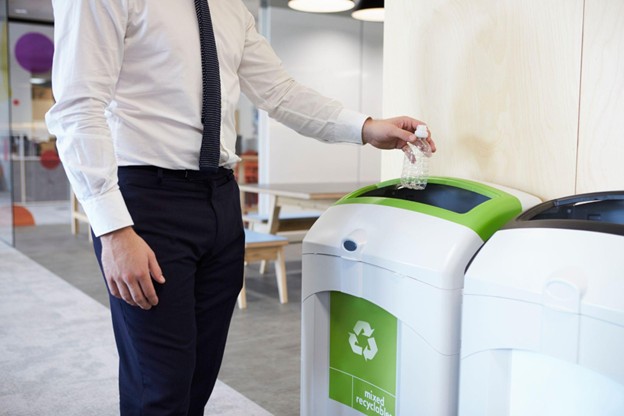
6. Improve Office Recycling and Waste Sorting
Office waste includes paper products, packaging materials, food containers, and everyday office supplies. Without proper waste sorting, recyclable materials often end up in landfills.
Providing clearly labeled recycling bins throughout the office helps employees dispose of materials properly. Common recyclable materials include paper, cardboard, aluminum, and certain plastics.
Educating employees on sustainable business practices can improve participation and increase the effectiveness of waste reduction programs.
7. Transition Breakrooms Away From Single-Use Products
Office breakrooms frequently generate waste from disposable cups, utensils, and packaged food containers. These single-use items contribute to landfill waste.
Businesses can reduce breakroom waste by switching to reusable dishes, utensils, and drinkware. Water filtration systems can replace individual plastic water bottles.
Bulk purchasing for coffee, snacks, and kitchen supplies also reduces packaging waste.
8. Encourage Sustainable Commuting and Hybrid Work
Employee transportation contributes to workplace environmental impact through fuel use and vehicle emissions.
Carpool programs allow coworkers who live near each other to share rides. Public transportation, biking, and walking can also reduce the number of vehicles commuting to the office.
Hybrid work policies allow employees to work remotely part of the week. Reducing the number of commuting days can lower fuel consumption and transportation-related emissions.
9. Purchase Environmentally Responsible Office Supplies
Office supply purchasing decisions influence environmental impact. Paper products, cleaning supplies, and everyday office materials vary in how they are produced and packaged.
Many businesses choose supplies made from recycled materials or sourced through environmentally responsible manufacturing processes. Examples include recycled paper, refillable pens, and eco-certified cleaning products.
Evaluating product sourcing and packaging helps businesses reduce waste generated through everyday supply use.
10. Track Energy and Resource Usage
Businesses that monitor resource consumption can better identify opportunities for improvement. Tracking electricity use, water consumption, and waste generation provides insight into operational impact.
Energy monitoring systems and building management tools help organizations measure electricity usage across office spaces. These tools can highlight equipment or processes that consume excessive energy.
Measuring resource use allows companies to evaluate sustainability initiatives and identify areas where additional improvements may be possible.

Work With a Clean Green Certified Uniform Provider
Many businesses that practice sustainability look for service partners that help reduce environmental impact across daily operations. A work uniform rental program supports this effort by extending garment life through repairs, reducing waste with centralized laundering, and maintaining consistent garment care for employees.
Prudential Overall Supply is Clean Green certified, which recognizes industrial laundries that follow standards for water conservation, energy efficiency, and responsible detergent use. Our service also supports sustainable apparel through garment repair, efficient delivery routes, and professional laundering processes designed to reduce resource consumption.
Contact Prudential Overall Supply to learn how our Clean Green certified uniform services can support your sustainability goals.